ASICS Run Tokyo Marunouchi
Lockers, showers, rental shoes and kit, a form lab, and daily group runs. Weekdays 6:30 to 21:30, weekends 7:30 to 19:00.
A field guide to running in Tokyo. Where to run, what to wear in each season, where to buy it, how to fuel from a konbini, which races to enter, and a plan that tells you what to run today.
Tokyo is enormous and almost flat, threaded with rivers and old gardens. These are the twelve places its runners actually use, with the rules each one asks you to keep.
Five kilometres, no traffic lights, and one direction for everyone. Flat along the moats from Sakuradamon to Takebashi, a climb to Chidorigafuchi, level to Hanzomon, then the long descent home beside the widest moat in Tokyo.
 Sakuradamon桜田門Nijubashi二重橋Otemon大手門Takebashi竹橋Chidorigafuchi千鳥ヶ淵Hanzomon半蔵門The climbThe long descent
Lockers and showers by the loop. Check prices and hours before you go.
Lockers, showers, rental shoes and kit, a form lab, and daily group runs. Weekdays 6:30 to 21:30, weekends 7:30 to 19:00.
Showers and lockers close to the west side of the loop.
Showers and lockers from about ¥800 to ¥1,000 a visit.
Tokyo gives you two running seasons and asks you to survive the third. From November to March the air is dry and the sky is blue. From June to September the heat and humidity decide what you can do.
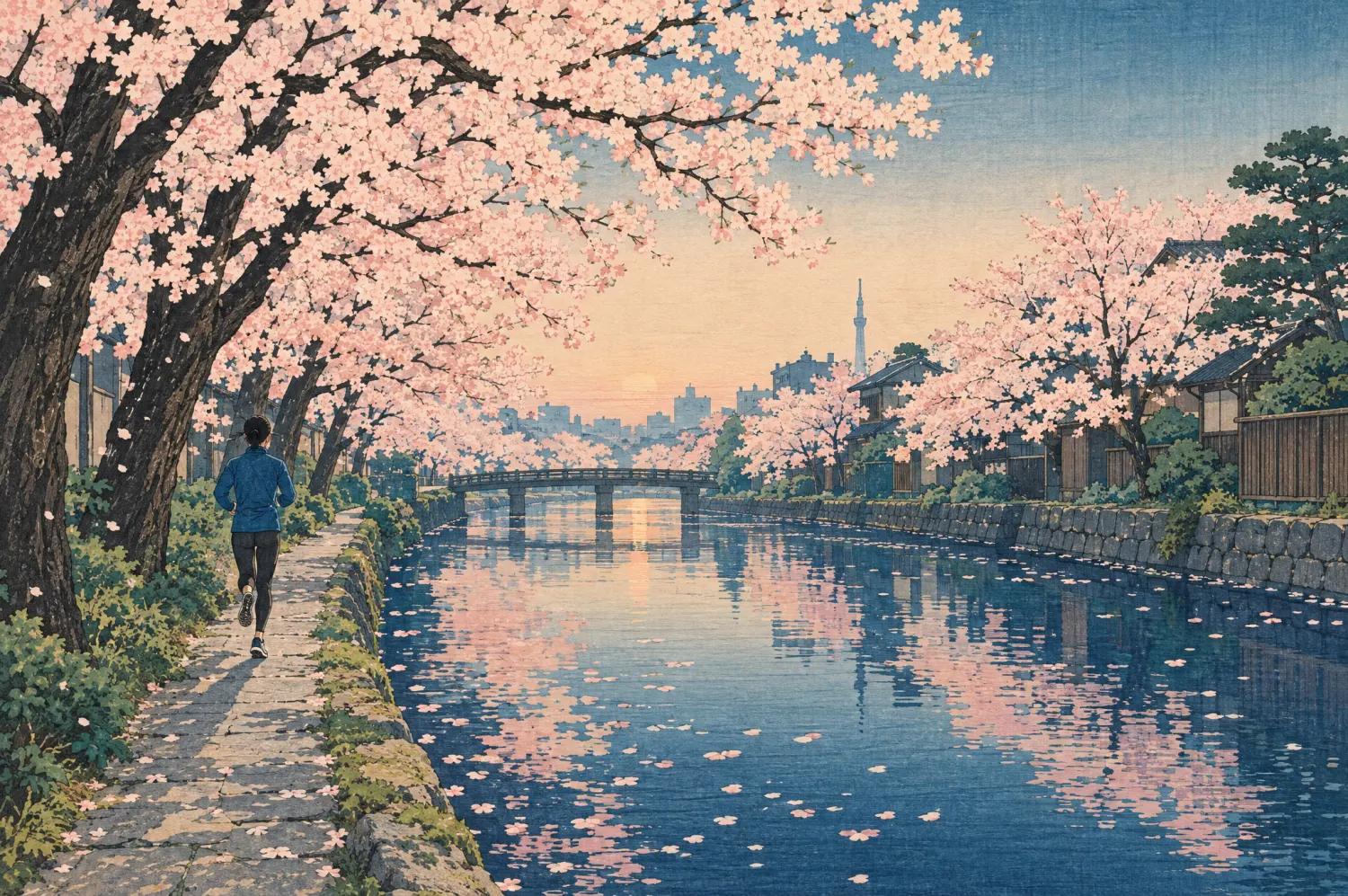
March to May
Cherry blossom along the canals and the race season’s last weeks. Cedar pollen runs from about mid-February to April and cypress from March to May: sunglasses help if you react. Shinjuku Gyoen bans running in its cherry weeks.
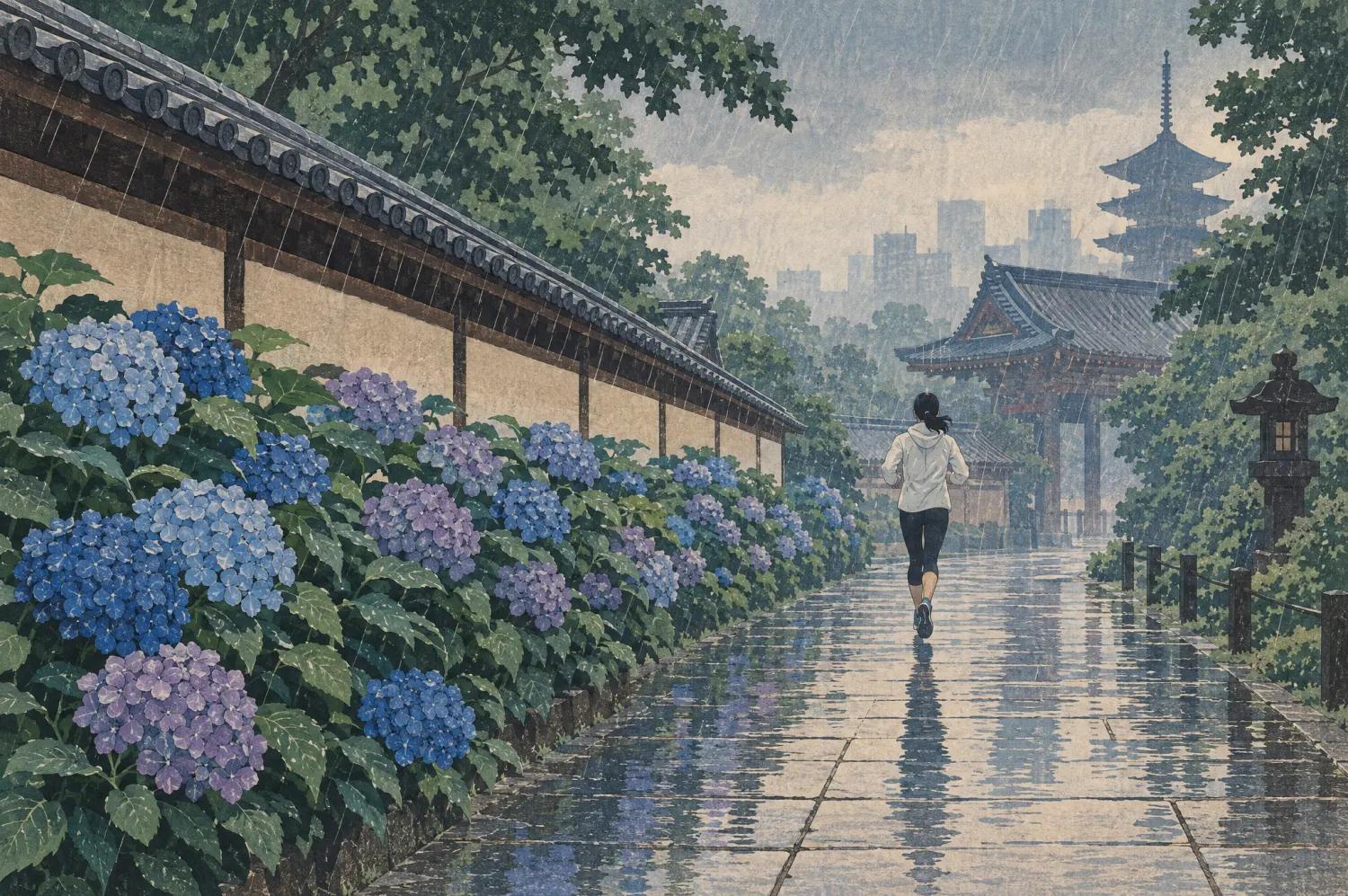
About 7 June to 19 July
Kanto’s rainy season normally runs from about 7 June to 19 July, though the dates move every year. Warm rain, high humidity, slick stone and paint. A brimmed cap and a light shell beat an umbrella.
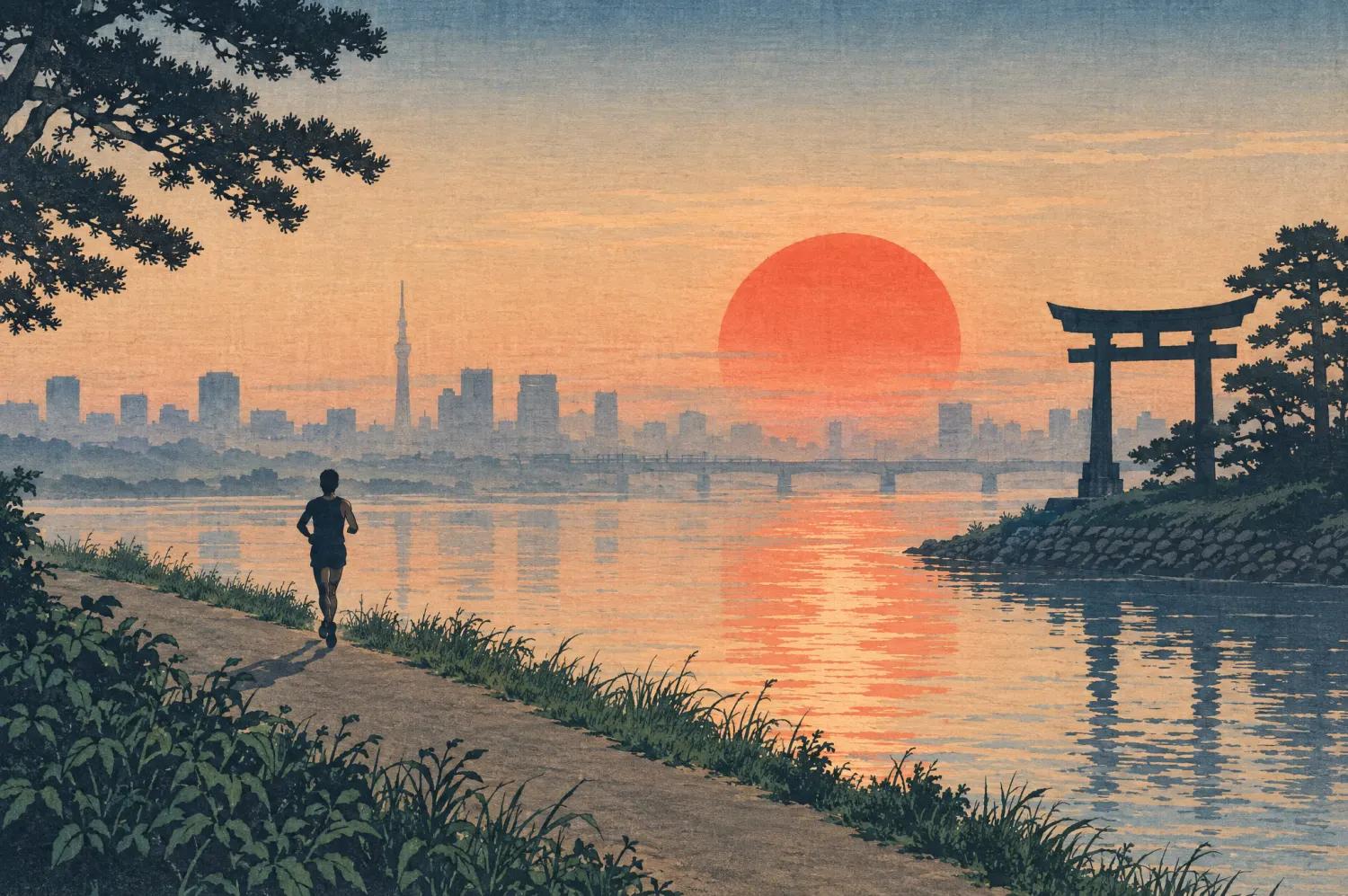
July to September
August averages a 31°C high with 74% humidity. The sun is up by about 4:30 in June, and so are Tokyo’s runners. Go at first light, slow down without guilt, and drink salt as well as water.
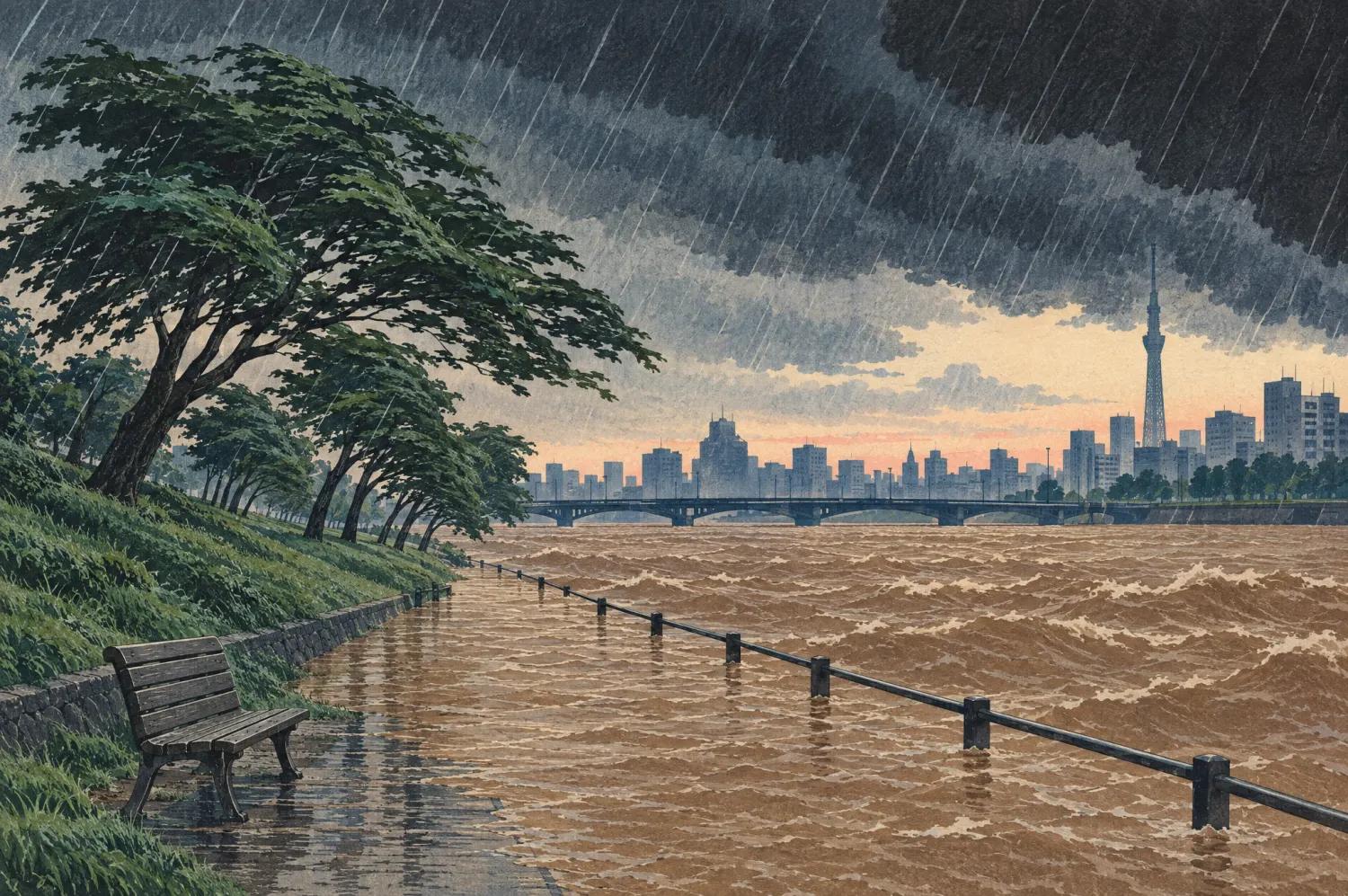
July to October, peak in September
About three typhoons a year come close to Kanto, most often in September. Riverside paths flood and trains stop. When one is forecast, stay off the river paths and check the Japan Meteorological Agency.
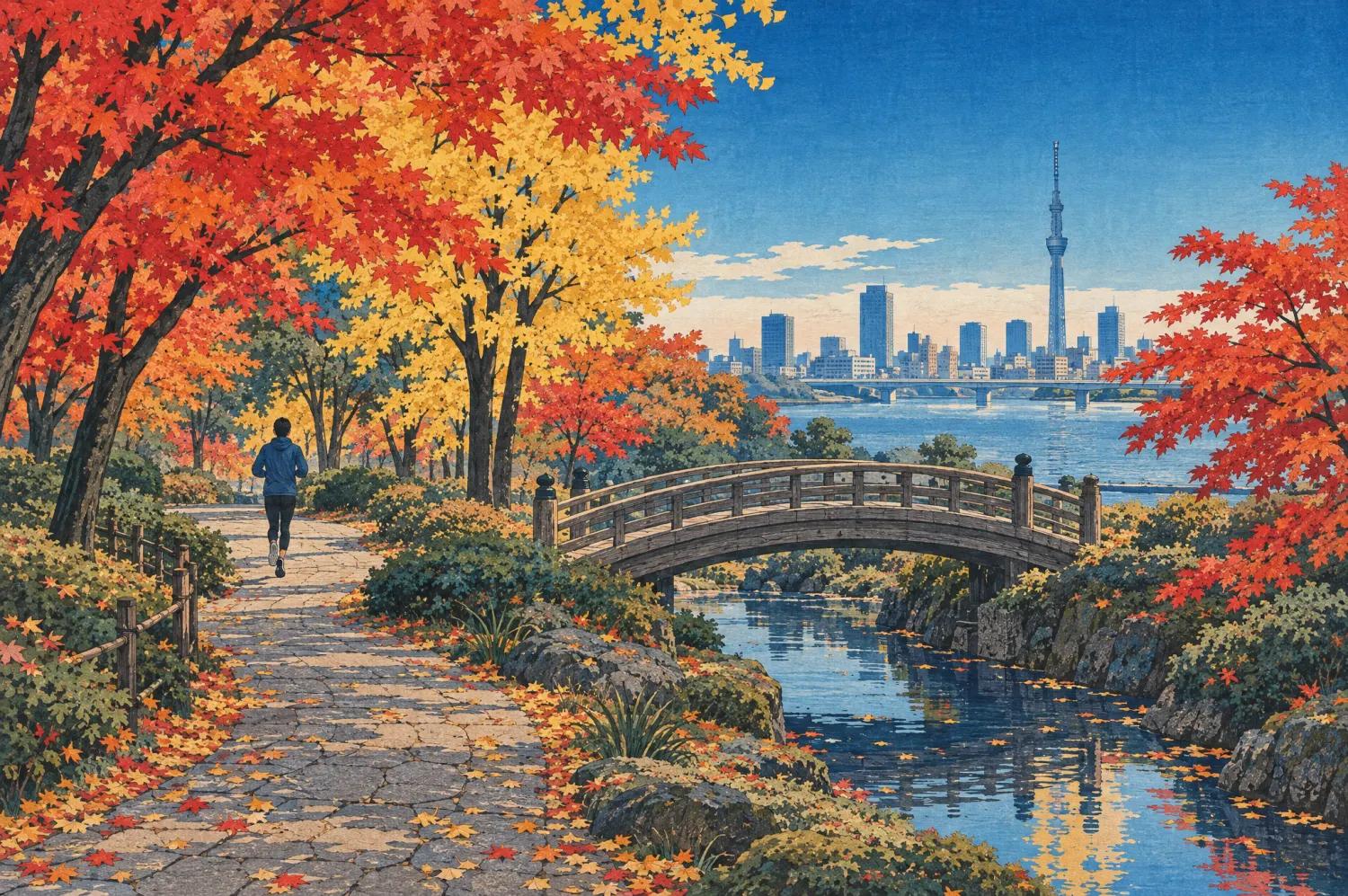
October to November
October is still wet, then the air dries, the ginkgo and maples turn, and the heat alerts end. Long runs come back, and so does the race calendar.
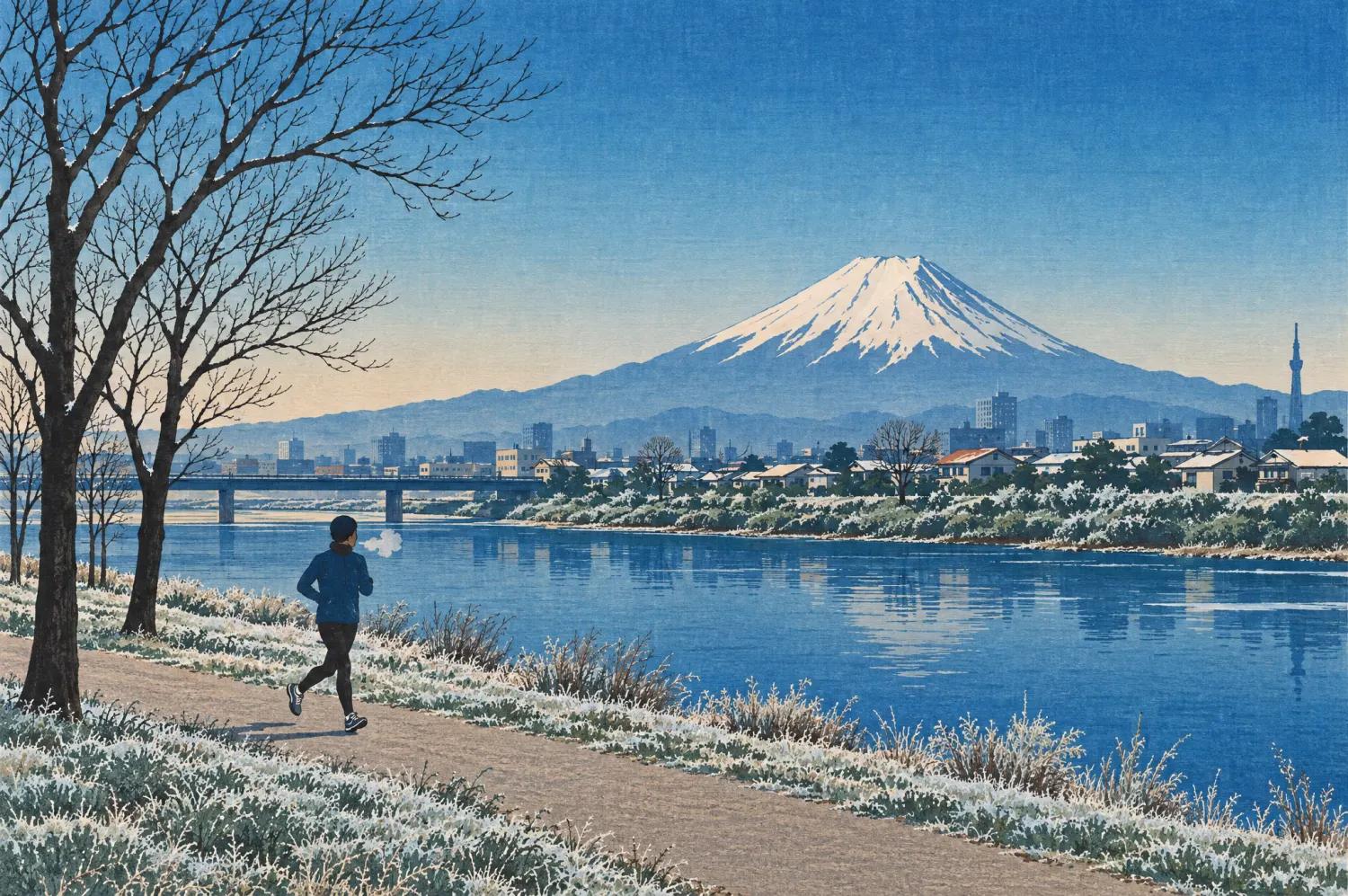
December to February
Tokyo’s secret: dry, sunny, rarely below freezing, with Mount Fuji on the horizon. January averages a 10°C high and most of Japan’s marathons happen now. Sunrise is near 7:00, so early runs start in the dark.
Japan measures heat for exercise with the WBGT index, which counts humidity and sun as well as temperature. The Ministry of the Environment issues a Heatstroke Alert when the day’s maximum is forecast at 33 or higher: the evening before at about 17:00, and again at about 5:00. In 2026 the alert season runs from 22 April to 21 October.
Exercise should stop except in special cases. Move the run indoors or to tomorrow morning.
Avoid hard sessions and long runs. Rest every 10 to 20 minutes and replace water and salt.
Take active breaks, about every 30 minutes during hard work.
Normal precautions: drink before you are thirsty and watch for warning signs.
Japan Sport Association guideline for exercise. Below 21, normal care.
Today’s heat indexA Tokyo year asks for four wardrobes: mesh for the wet heat, a brim for the rain, layers for the dry cold, and lights for the evening runs after work.
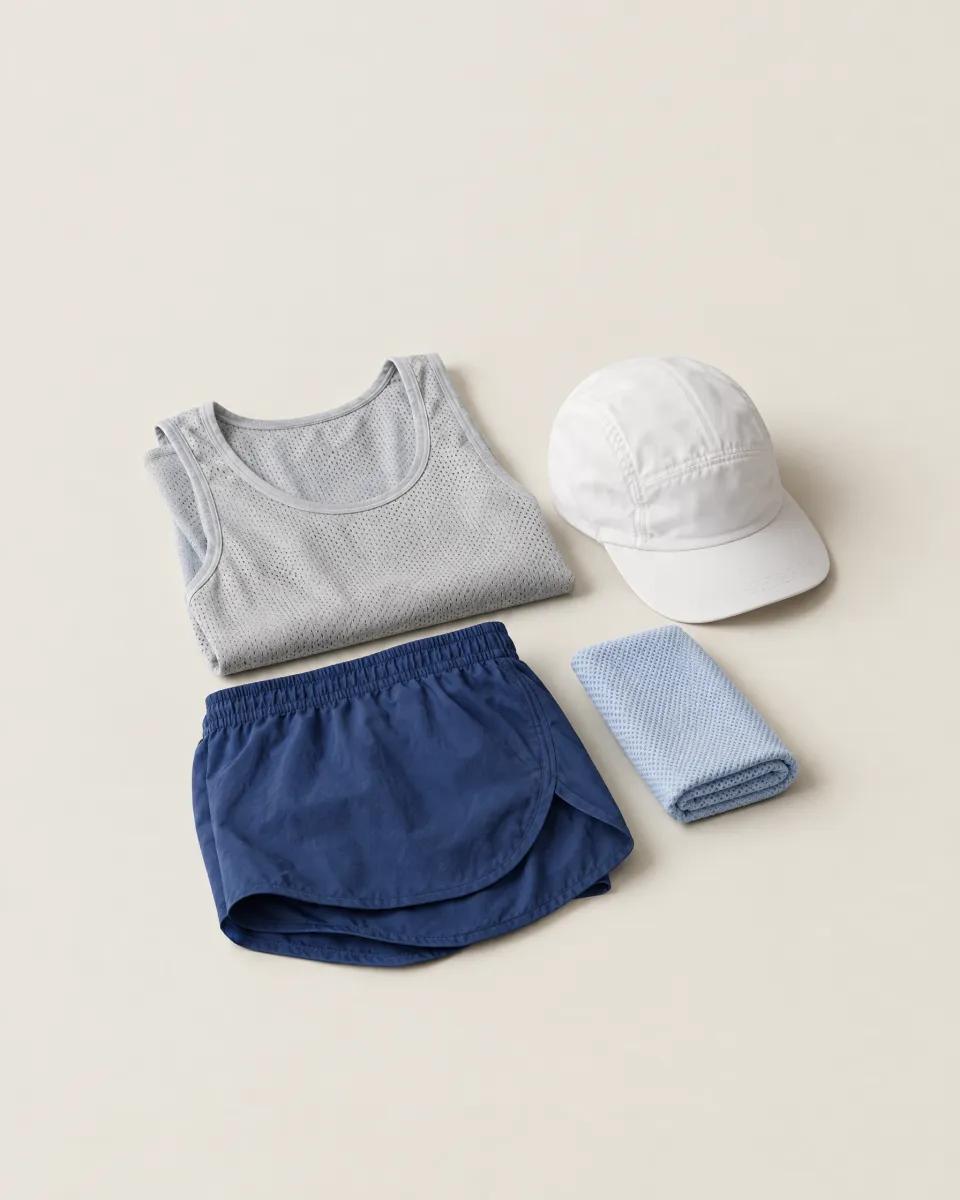
Less fabric, more air, and something white on your head.
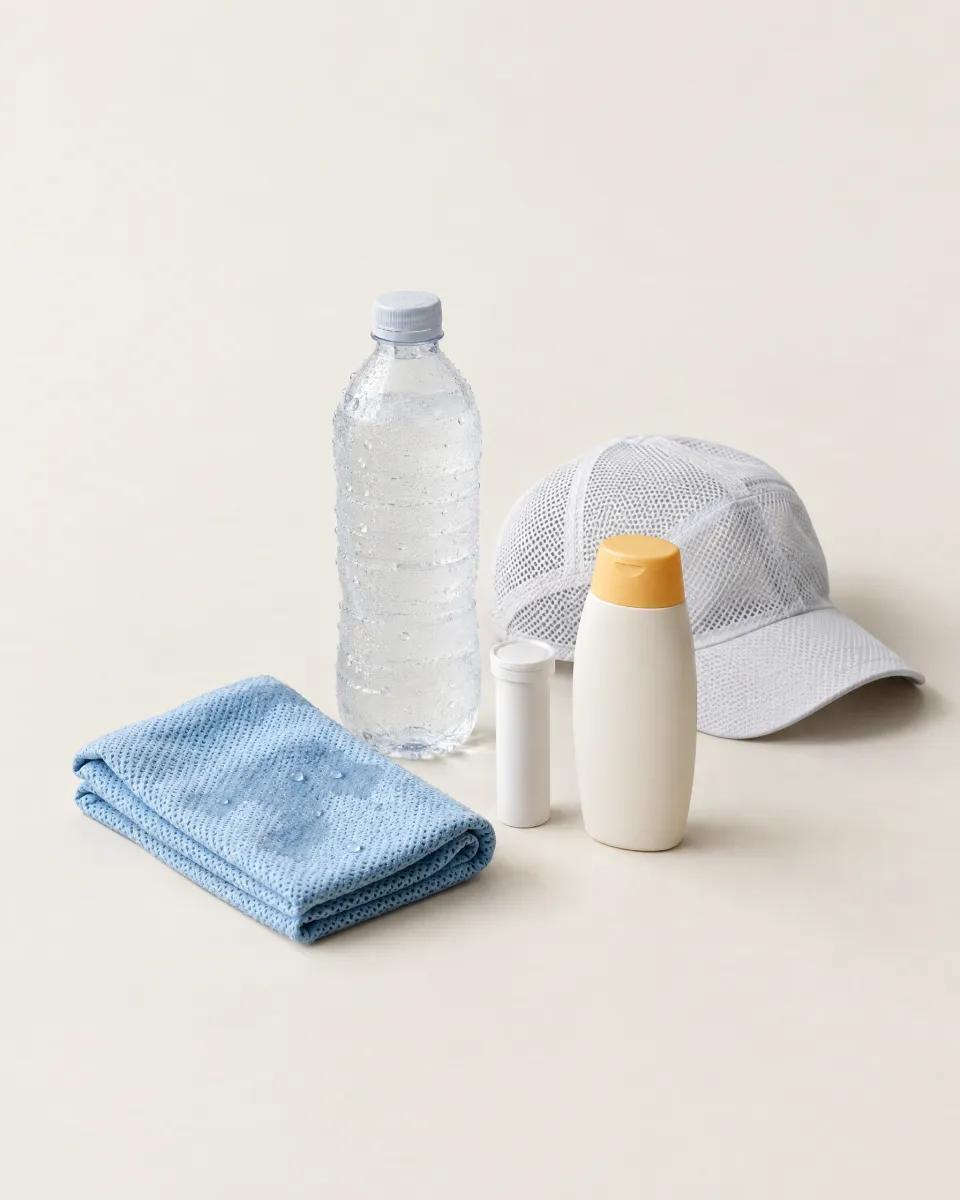
For the weeks when the heat index decides your run.
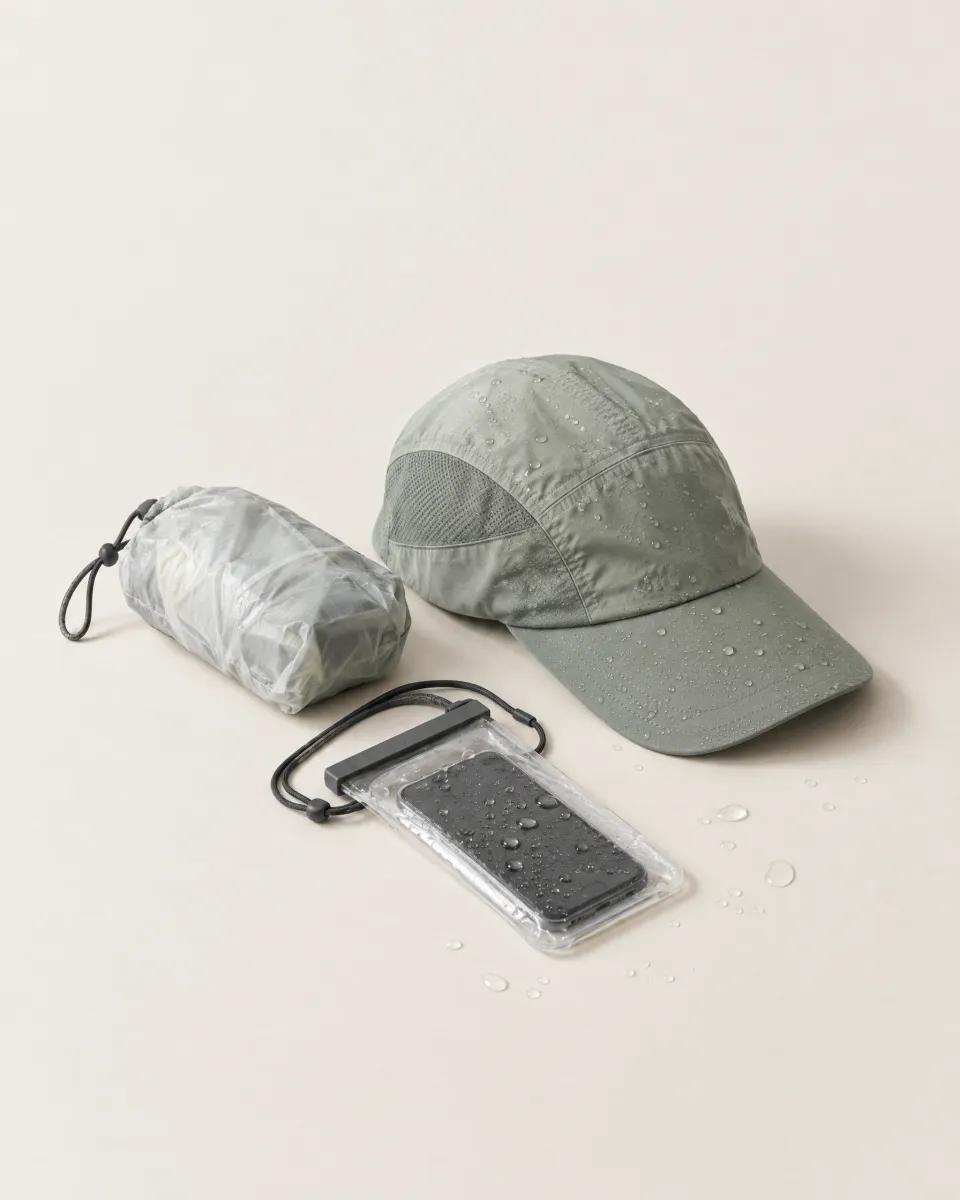
Warm rain needs a brim, not a coat.
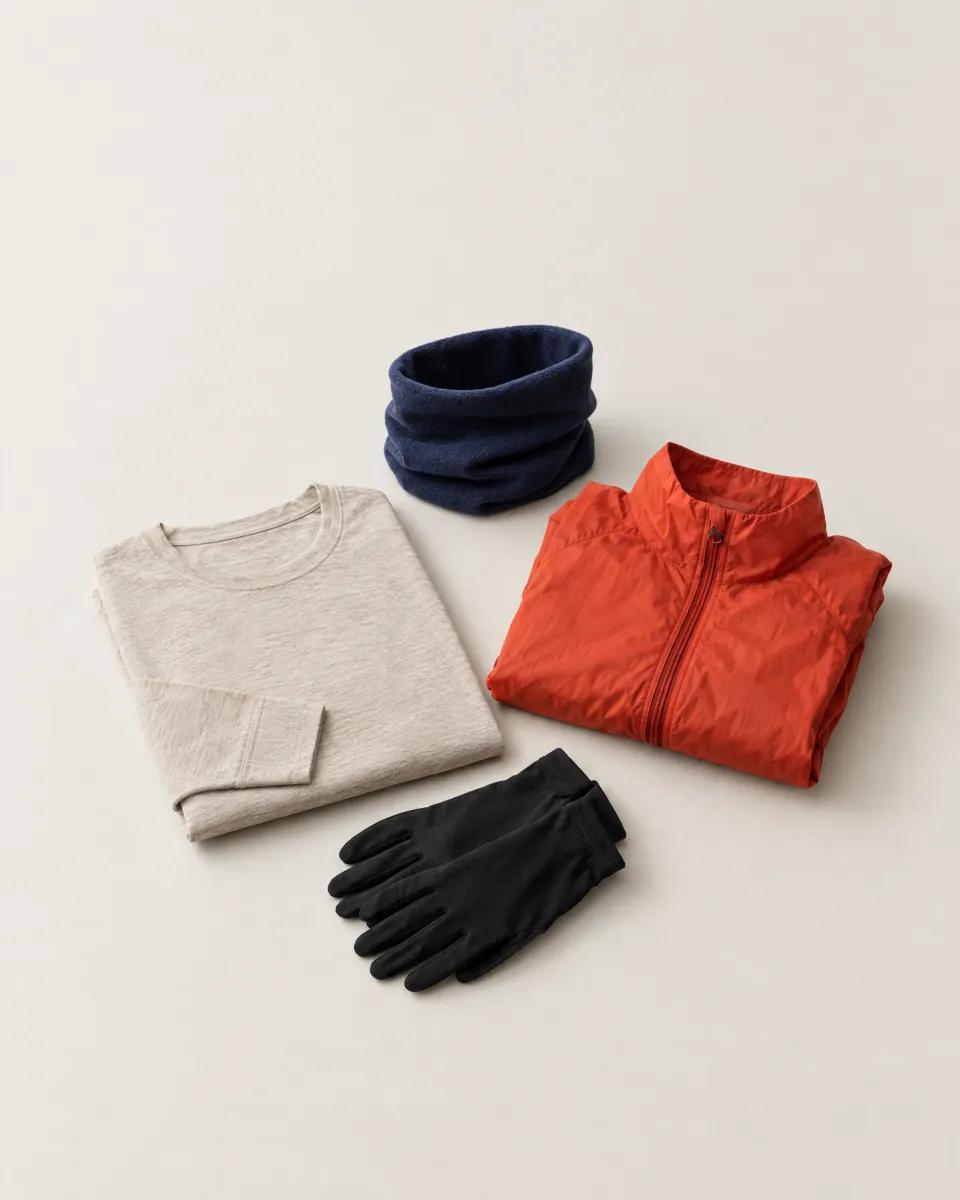
Dry and cold at dawn, warm by ten.
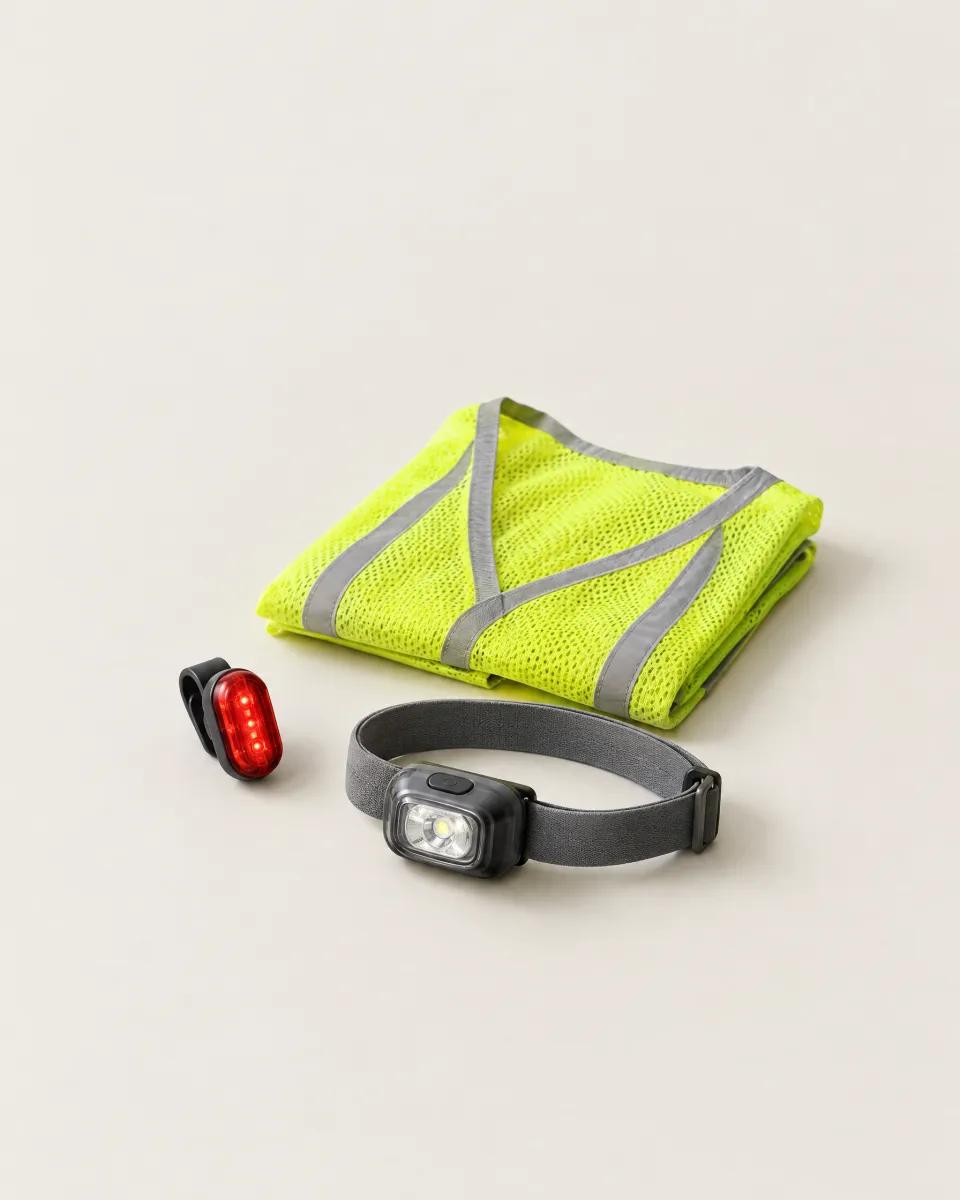
Tokyo is safe at night; the cyclists cannot always see you.
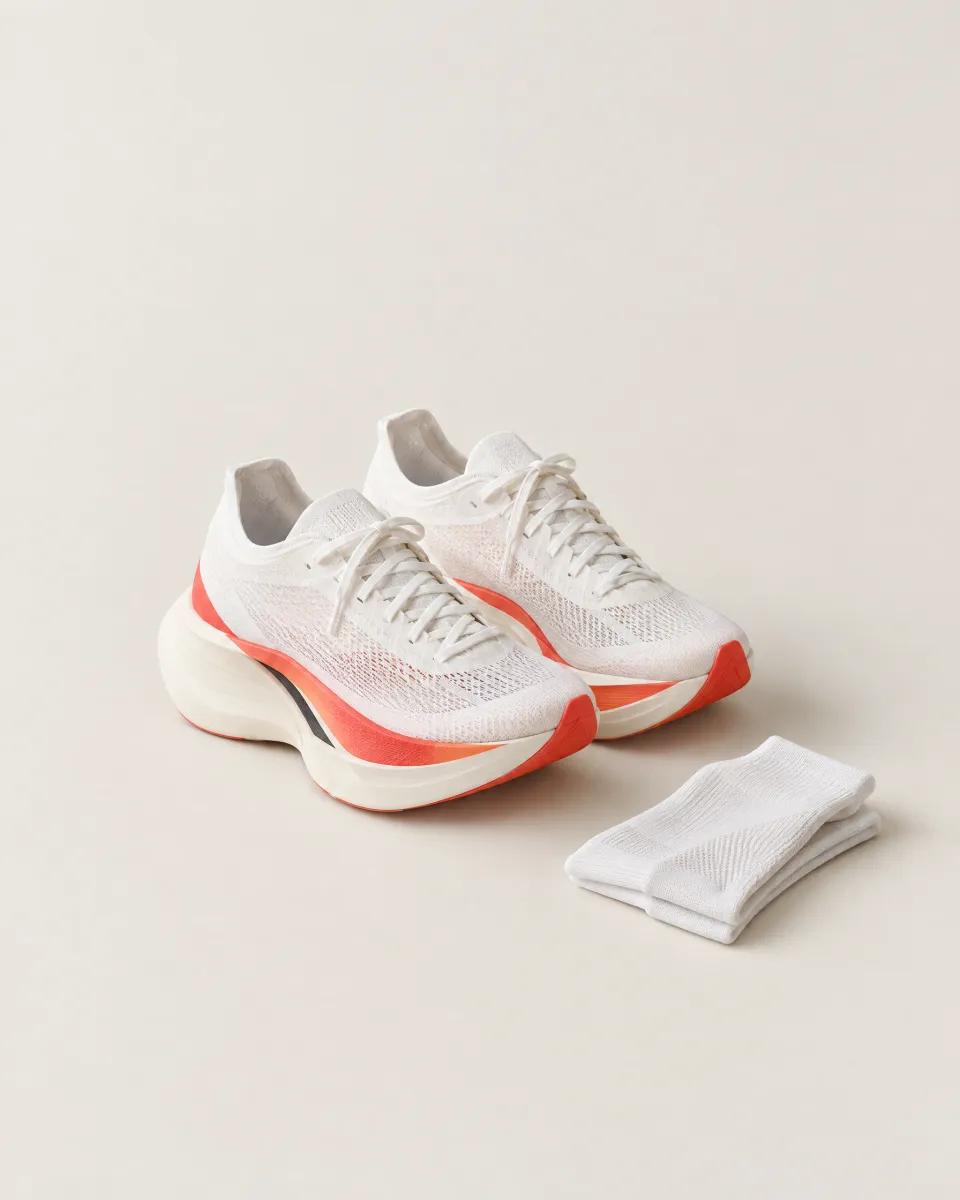
Nothing new on race day. Everything here has been on a long run.
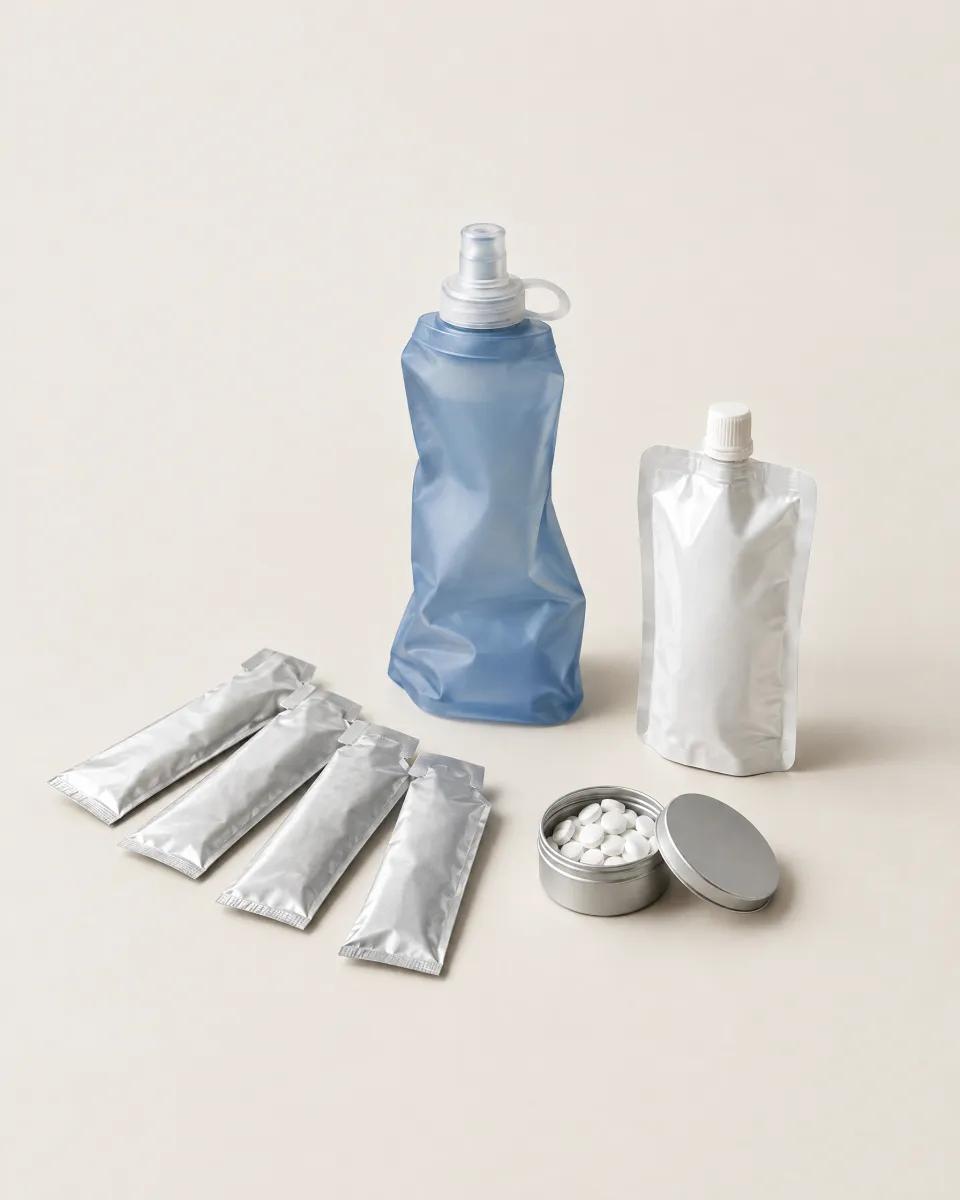
Practise eating on the run, the same way you practise running.
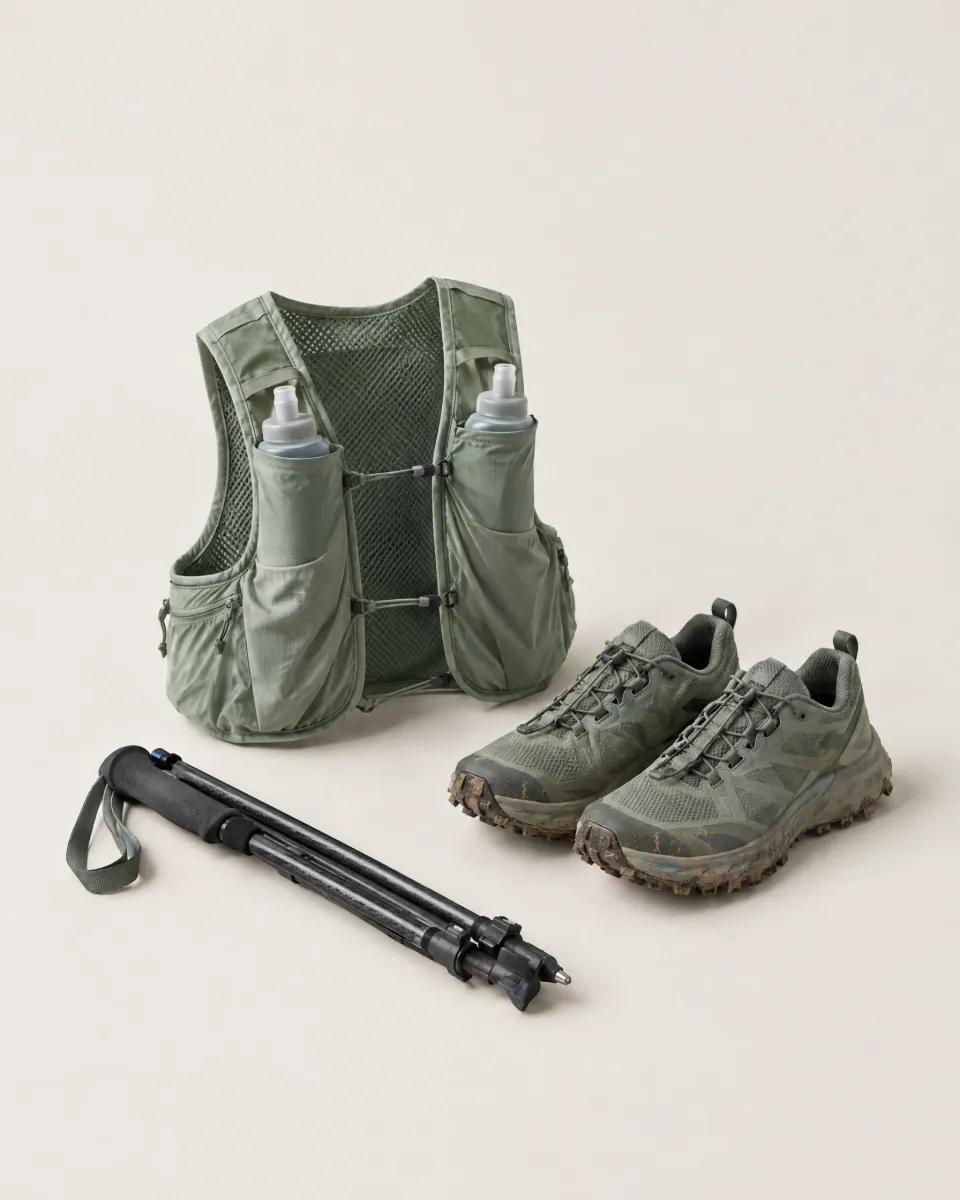
For Takao, Okutama and beyond.
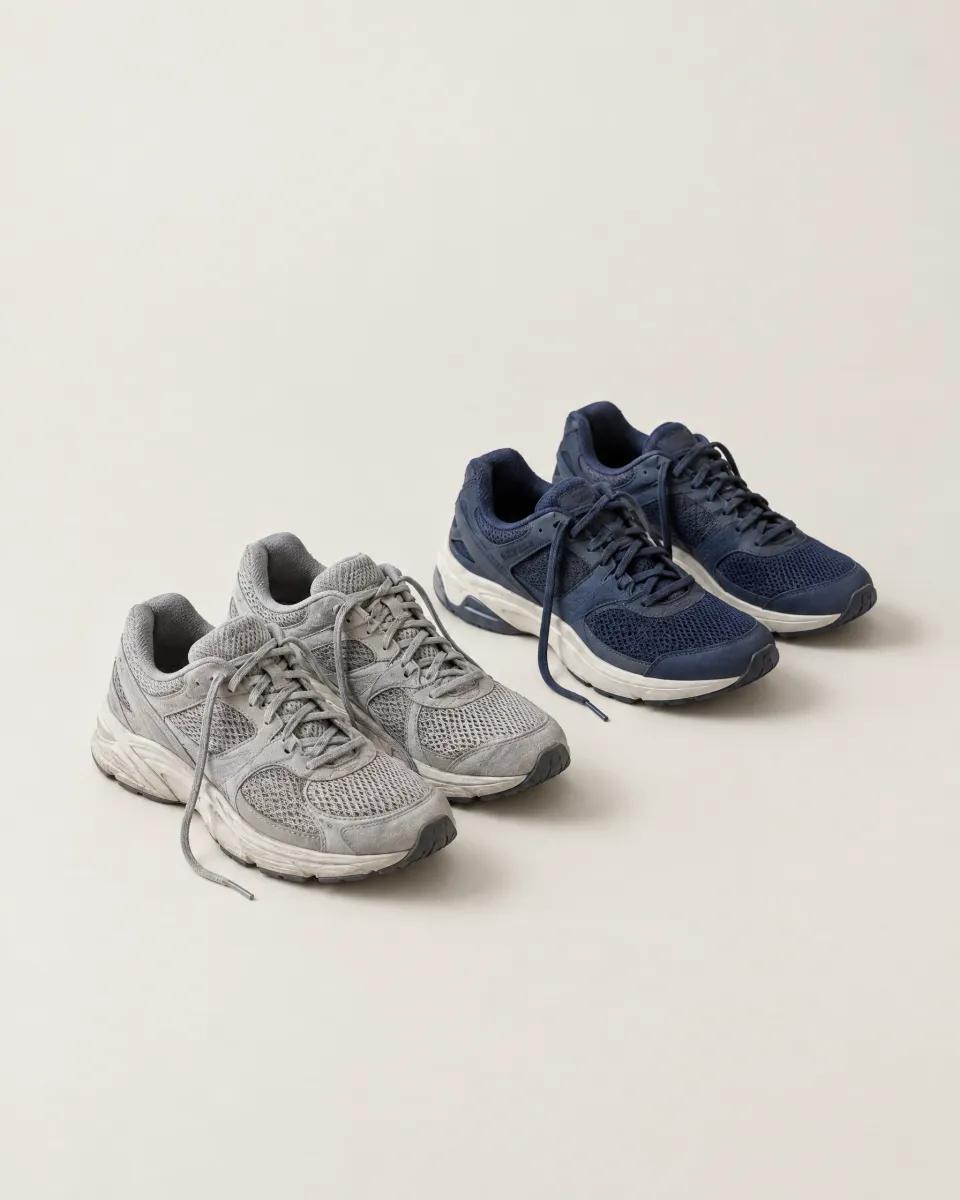
Two pairs in rotation beat one pair worn out.
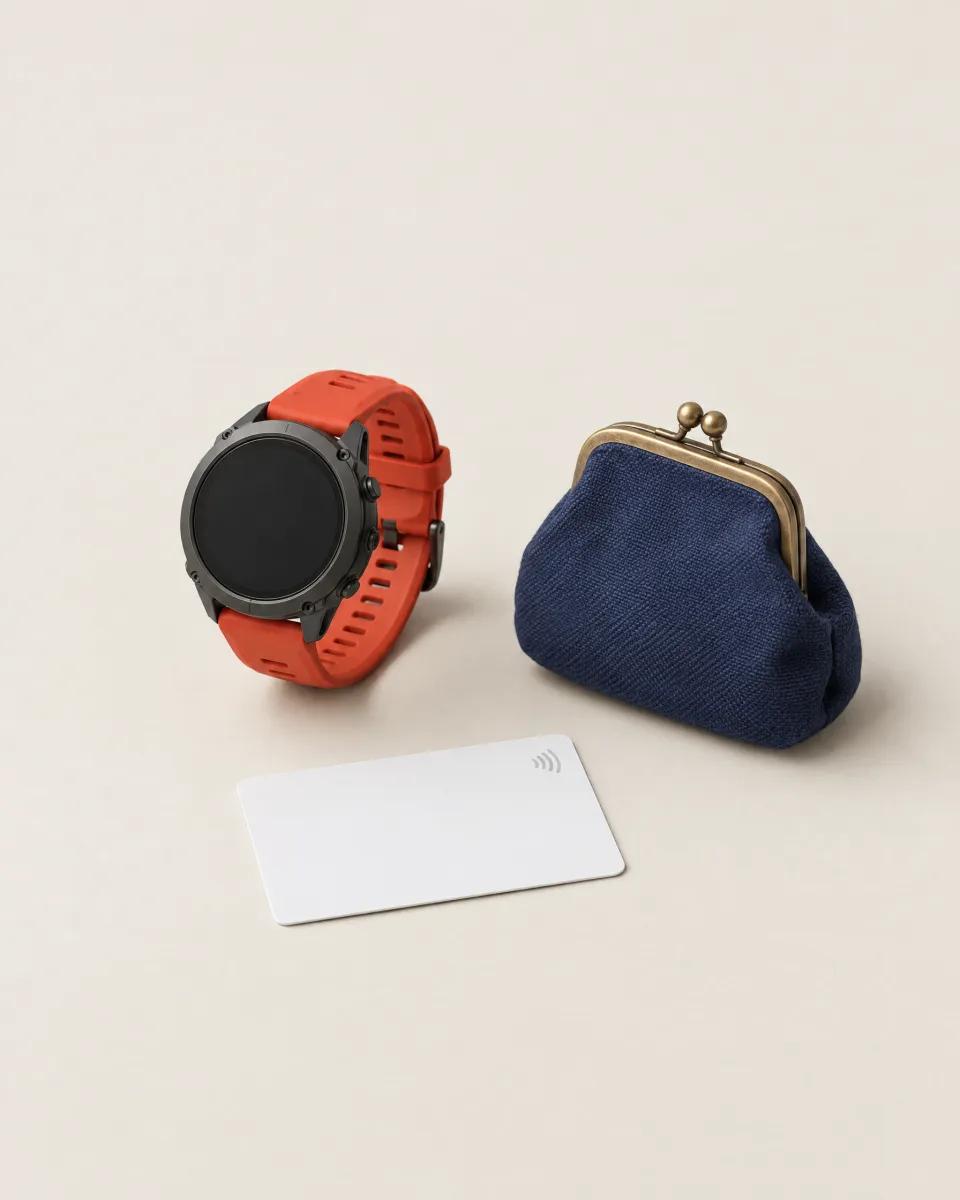
Small things that save a run.
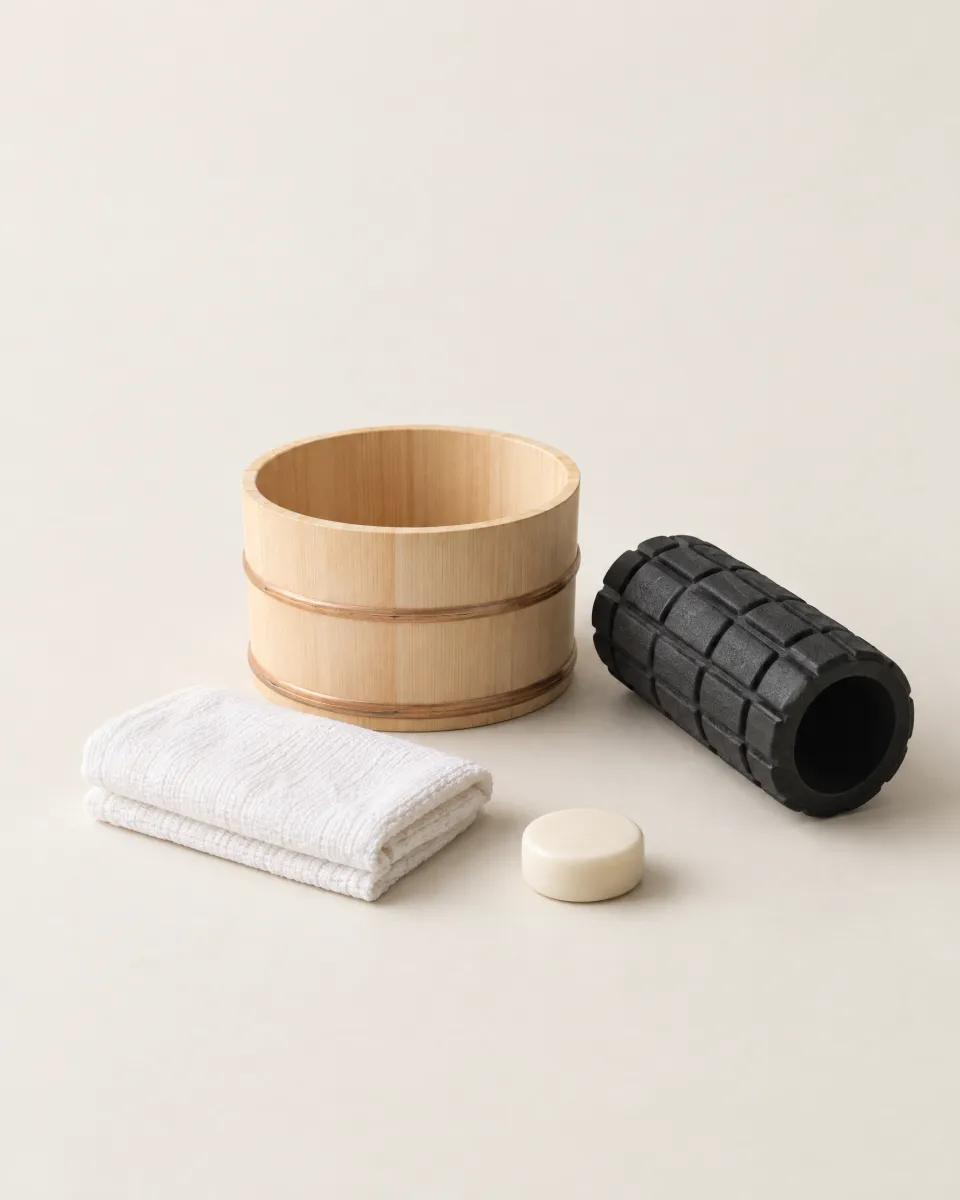
The long run ends at the bath, not at the watch.
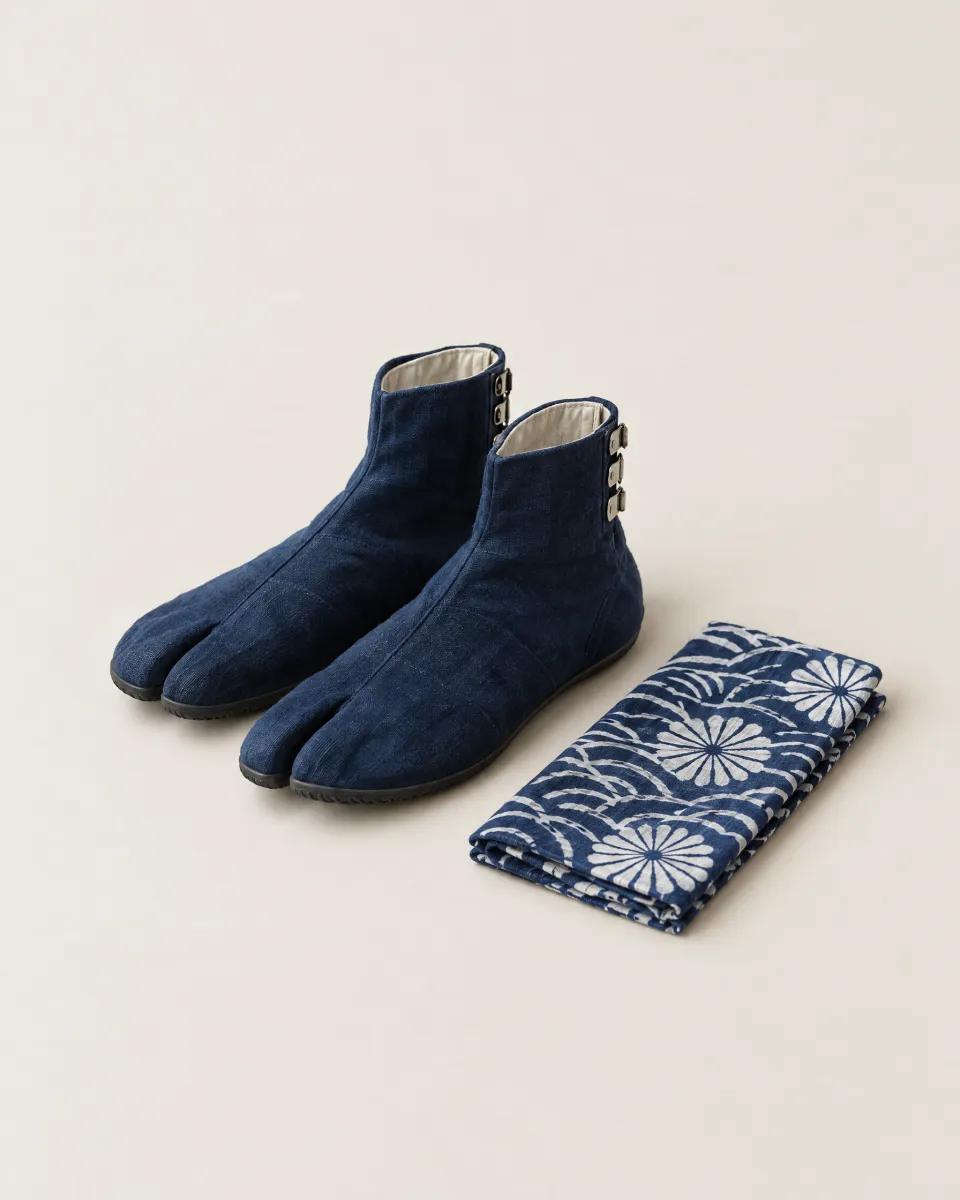
Split-toe running tabi: the thin-soled shoes some Japanese runners swear by.
Japan is home to ASICS and Mizuno, and Tokyo sells running shoes in depth. Try shoes in the afternoon, when your feet are at their largest, and bring the socks you run in.

Older guides are out of date. Nike Harajuku moved next door in September 2025, into the Harajuku Quest building at 1-13-14 Jingumae, and adidas RUNBASE by the palace has closed. Every shop below was open when this guide was checked.
A shop and runners’ base by the palace: lockers, showers, rentals, a form lab and daily group runs.
The brand’s first store, reopened after a renovation in 2025, with a 3D scan of both feet.
Opened in Ginza in September 2025, one of On’s largest stores in the world, with a run club space downstairs.
A store built around running: shoe trials, run club sessions with pacers, and a locker service.
Ningyocho. Natural-running shoes, foot conditioning, a trail floor and hard-to-find fuel. Closed Monday and Tuesday.
HOKA’s largest store in Japan, with a run club space on the second floor.
One of New Balance’s three flagships worldwide, reopened in December 2025 with a performance floor.
Doubled in size in 2024. Road and trail shoes on the ground floor.
A French running boutique from Lyon, opened in March 2026: vintage race tees, Japanese labels and community runs.
Japan’s largest sports store, by Shinjuku’s east exit, with more than 200 shoe models on one floor.
A long-standing running store in Hongo, five minutes from Suidobashi station.
Mizuno’s global flagship in Kanda Ogawamachi, home of the Wave Rebellion line.
Independent running wear from a Sangenjaya atelier, with ASICS collaborations.
Tokyo trail-running apparel since 2012.
A small ultra and trail label with a cult following.
Technical outdoor wear by two former Issey Miyake designers. More mountain than race.
Convenience stores and vending machines are everywhere, open all night, and stocked with exactly what a long run needs. Plan routes past them and you can run light.
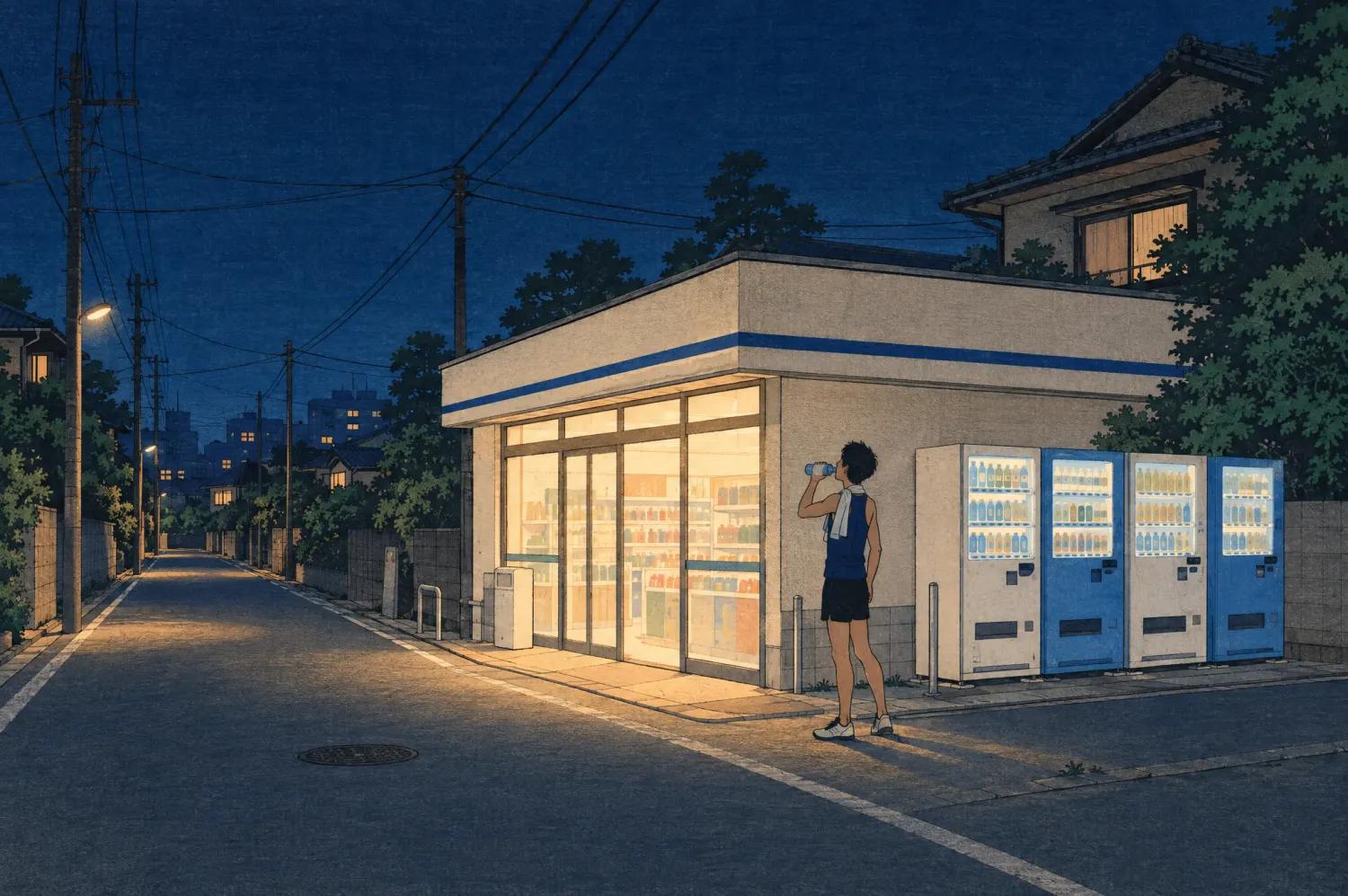
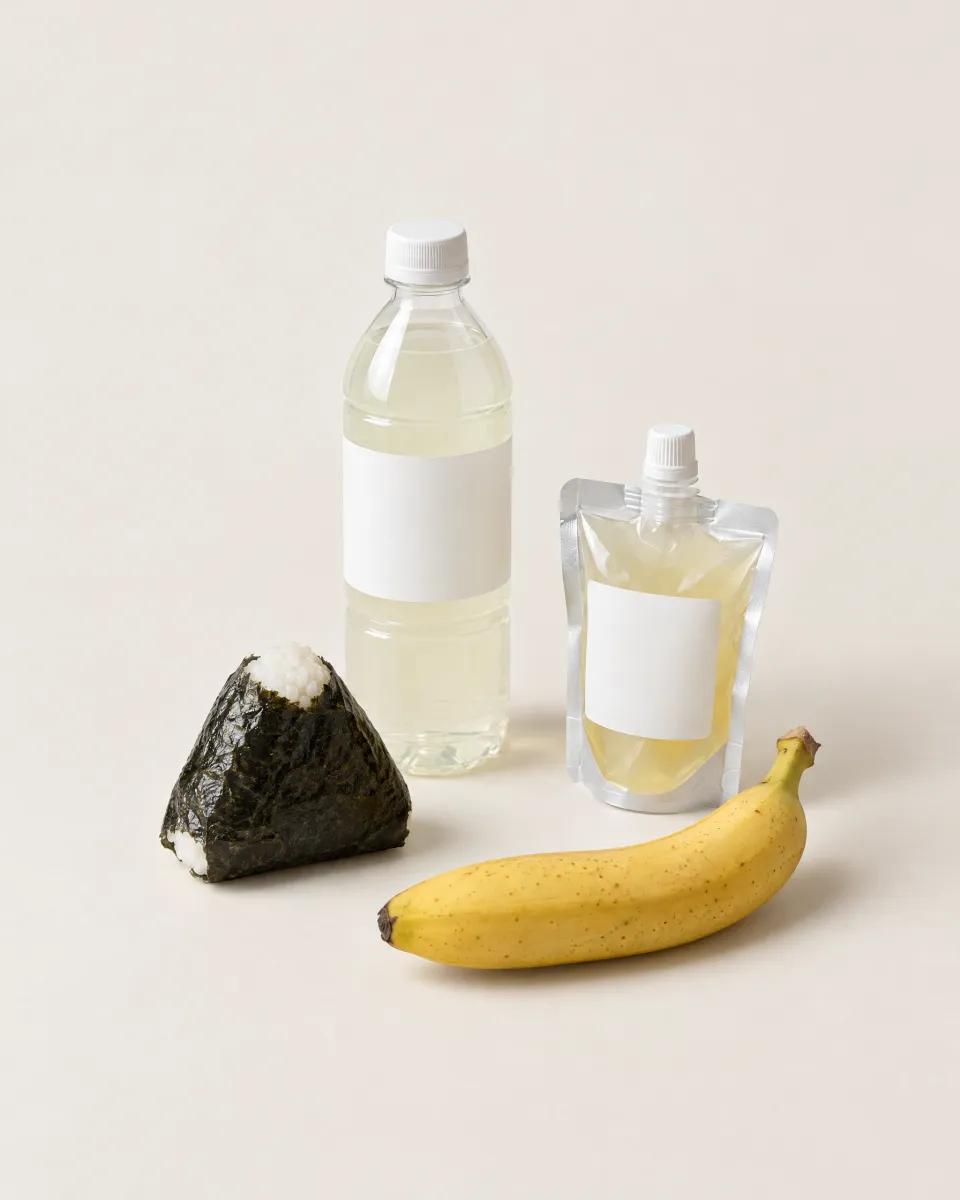
The sports drinks of Japan. Cold, everywhere, and the easiest way to replace salt on a summer run.
Spouted pouches of carbohydrate jelly, such as Morinaga’s in Jelly. Japanese runners’ favourite pre-run breakfast and long-run fuel.
Simple carbohydrate before a long run or after it. Plain salted rice balls (shio musubi) go down easily.
An oral rehydration solution for dehydration and heat illness, not a sports drink. Keep it for when things go wrong.
Ajinomoto’s amino acid range, including energy jellies and small gels for racing.
Japanese race gels (Mag-on carries magnesium) and Medalist’s citric acid drinks, sold by specialists such as Stride Lab.
Tokyo has around 400 public baths, and a long run that ends in a hot bath is a ritual for many local runners. The water is hot: start with a few minutes and drink when you get out.

A classic sento with a Mount Fuji mural in Uchi-Kanda, about 5 minutes from Otemachi. Many regulars are palace-loop runners.
English-speaking physiotherapy in Ebisu, including running gait assessments.
Physiotherapy and sports massage in English, in Azabu.
Japan’s race calendar is packed into the cool months. Big-city races use a lottery; many smaller ones are first come, first served, and sell out within days. Here is the season ahead.
Updated daily. Each date checked against its official site on 7 October 2026.
Half marathon starting and finishing in the National Stadium.
The port city’s big marathon, half an hour from Tokyo.
Run out over Tokyo Bay on the Aqualine. Held every other year.
A coastal course on the Shonan shore. Runners carry their own bottle: no paper cups.
Japan’s great university relay, 10 legs and 217.1 km from Otemachi to Lake Ashi and back. Go and line the road.
Flat and fast, just north of Tokyo.
Temples and shrines from Takebishi Stadium to Heian Shrine.
The classic hilly 30 km in the western Tokyo valleys, plus a 10 km.
A fast, flat big-city course that now hosts the old Lake Biwa elite race.
The 20th edition, with 40,000 runners. A World Marathon Major from Shinjuku to Tokyo Station.
One of the world’s largest women’s marathons, starting and finishing at the dome.
A double marathon in 2027: 45,000 runners on Saturday and 55,000 on Sunday.
A World Marathon Major through the whole city: out of Shinjuku, east through Kanda to the turn at Ueno-hirokoji, across the Sumida twice, through Ginza, out to Tamachi and back to Tokyo Station.

Entry opens in August for the following March. For 2027 it ran from 14 to 28 August 2026, with results in September. Expect to lose a few times.
5,000 places, with a donation set by each charity (often ¥100,000 or more) on top of the entry fee. Applications run from late June into August.
The Tokyo Marathon Foundation’s free club. Members get a separate draw for runners who have lost three years in a row.
Japan’s main race portal. Most domestic races take entries here, and it lists which entries open each week.
The second big portal for road races and trail events.
Smaller and newer events, fun runs and trail races.
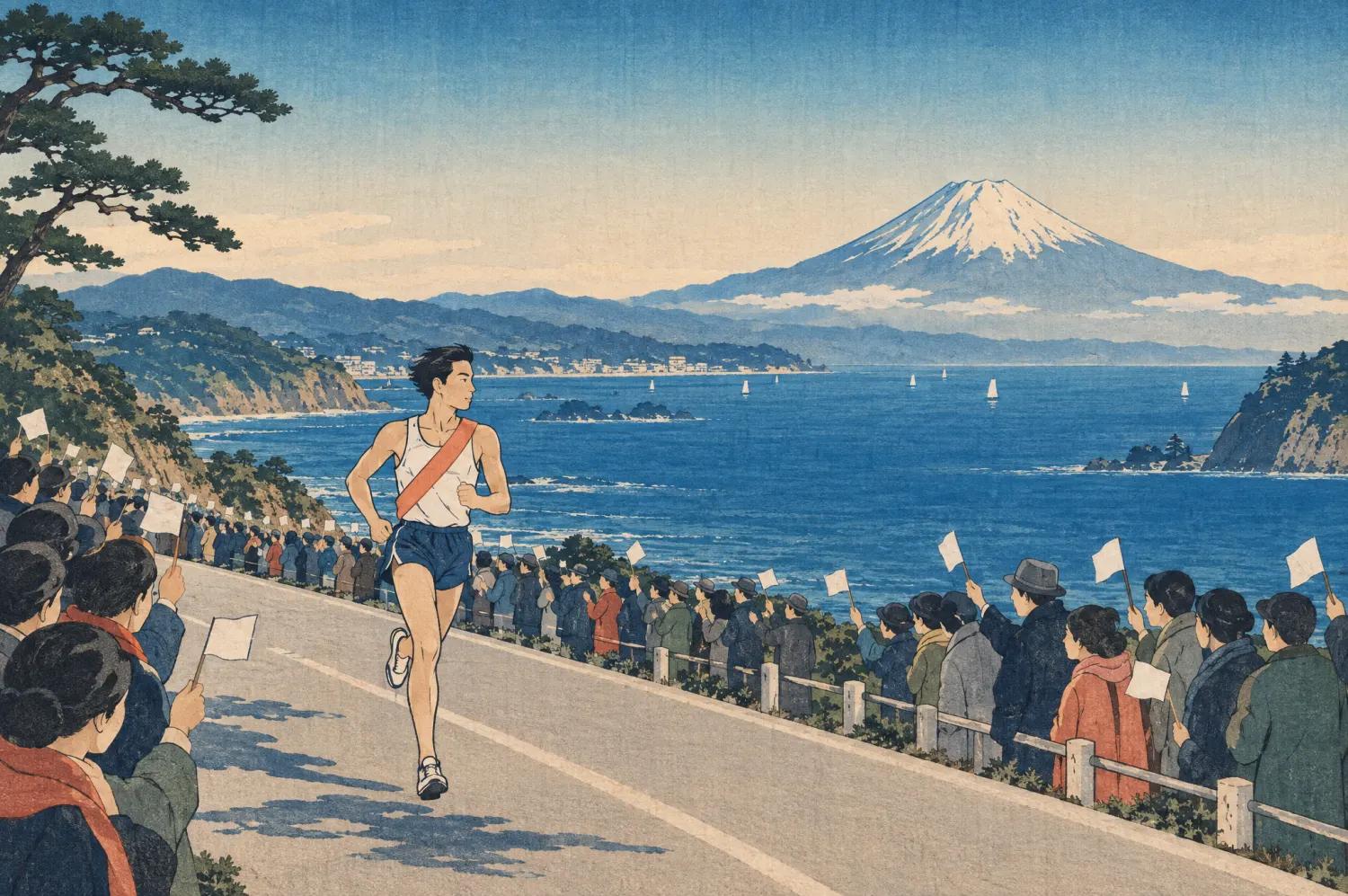
On 2 and 3 January, university teams relay a sash 217.1 km from Otemachi to Lake Ashi and back. It is one of the most watched sporting events in Japan. Good places to stand:
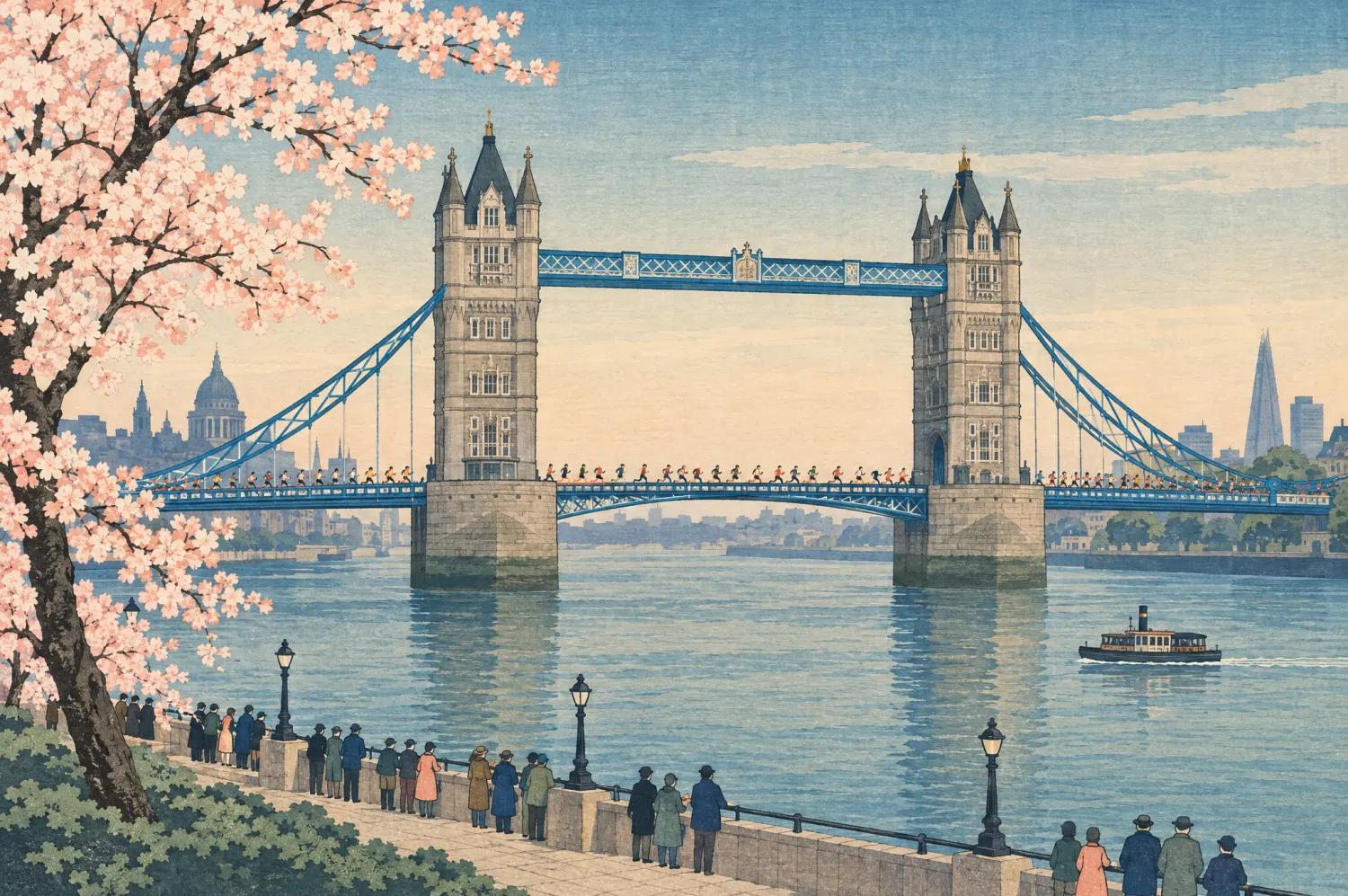
This guide began as a plan for one runner training in Tokyo for London. A Tokyo winter is ideal preparation, and the last long runs fall in cherry season. What to know for 2027:
Tokyo’s clubs are free, friendly and used to newcomers. Most announce the week’s runs on Instagram, LINE or Strava, so follow before you show up.

The English-speaking club. Wednesday 19:30 track workout at Oda Field (when open), then the sento and a drink in Yoyogi-Hachiman.
Three or four runs a week at rotating spots, mornings 6:30 to 9:00 and evenings 18:00 to 21:00. Posted a day or two ahead on Instagram, LINE and Strava.
A relaxed crew in Yoyogi Park on Monday evenings (20:10) and Saturday mornings (9:00). Check Instagram for the meeting point.
The Tokyo Marathon Foundation’s club: events, training content, and a separate entry draw for repeat lottery losers.
ASICS Run Tokyo Marunouchi (daily, by pace group), Nike Ginza, On Tokyo in Ginza and HOKA Harajuku host group runs. Check each store’s channels for the week.
Coached sessions led by a former Asian marathon champion, at changing venues.
Tokyo works because people share tight spaces with care. Runners are guests on the pavement; run like one and the city opens up.
On shared pavements, pedestrians have priority. Slow down rather than weave.
The palace and Komazawa loops run counter-clockwise. Never run against them.
At narrow points, run in a line and wait to pass.
Large groups need permission at the palace (20 or more) and are not allowed in Shinjuku Gyoen (10 or more).
Carry your gel wrappers and bottles home, or use the recycling bins beside vending machines for bottles only.
Phones sound an Earthquake Early Warning. Move away from walls, vending machines, poles and glass, and watch for falling objects.
すみません、通ります
Sumimasen, tōrimasu
Excuse me, coming through.
お疲れさまです
Otsukaresama desu
Said to fellow runners after a session: well done.
頑張って!
Ganbatte!
What the crowd shouts: keep going!
トイレはどこですか
Toire wa doko desu ka
Where is the toilet?
足がつりました
Ashi ga tsurimashita
I have a cramp in my leg.
救急車を呼んでください
Kyūkyūsha o yonde kudasai
Please call an ambulance.
Visitors can call the Japan Visitor Hotline, 050-3816-2787, any time, in English. Foreign residents aged 16 and over must carry their residence card, on runs too; visitors their passport.
Tell it how much you run, how many days you have and which race you are aiming at. Every day it gives you one thing to do, and it adapts when life gets in the way: a lighter week when you are tired, short runs when you travel, walk-run when something hurts. It stays on this device. No account.